Tree removal cost in Austin: the size, the drop zone, the crane, and the city's share
A tree's removal price is four numbers added together: the climbing and rigging, the haul-off, the stump, and, for a tree over the city's threshold, the permit and whatever mitigation the city requires. Here is each one for Austin in 2026.
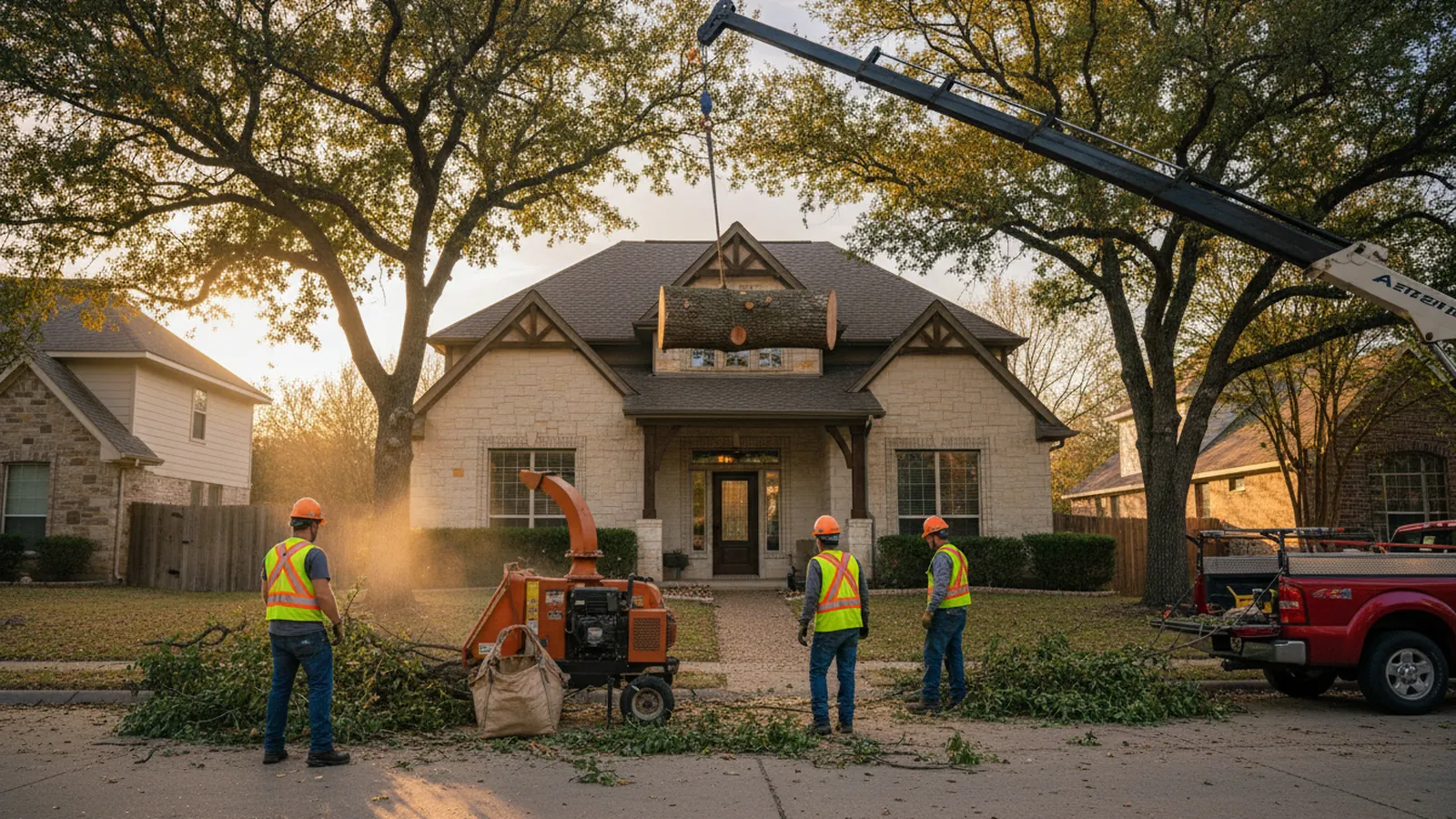
By size and situation
| Tree | Open yard | Over structures |
|---|---|---|
| Small, under 25 ft (crape myrtle, young oak, hackberry) | $300 – $600 | $500 – $900 |
| Medium, 25–45 ft (cedar elm, red oak, ash) | $700 – $1,200 | $1,100 – $1,800 |
| Large, 45–70 ft (live oak, pecan, mature elm) | $1,400 – $2,400 | $2,000 – $3,500 |
| Very large or tight access, crane-assisted | $2,500 – $4,000 | $3,500 – $6,000+ |
| Dead or hazardous, emergency dispatch | + $200 – $600 | Priority same day |
Open yard means the tree can be felled or dropped in large pieces. Over structures means it is climbed and lowered in sections on ropes, or craned, because the house, the pool, the fence or the neighbor's roof is in the drop zone. That difference, not the species, is what doubles a price.
The crane question
A crane costs several hundred dollars an hour with an operator. It sounds like the expensive option and often is not. A big live oak over a Westlake house might take a climbing crew three days of rigging; a crane lifts the same tree out in sections in a morning. When the tree is large, the access is tight, or the pieces have to travel over a roof, the crane total is frequently lower than the rope total, and it is always safer for the house. The estimate shows both when both are possible.
The city's share
Inside Austin, a healthy tree 19 inches or more in diameter on developed residential land needs a permit to remove. The application, with photos and a diameter measurement, runs $150 to $400 in the contractor's time plus the city's fee. A heritage tree at 24 inches needs a hardship finding and mitigation: replacement trees planted on site, or a payment into the city's tree fund, set by the city according to the inches removed. That mitigation is the line that surprises people; on a big heritage oak it can rival the removal itself, and the city can refuse. Dead or hazardous trees are exempt when the threat is imminent, but the documentation still has to be done. The permit guide goes through it.
The stump and the wood
Stump grinding adds $100 to $700 by diameter, and most people want it; a stump in a lawn is a mower obstacle and a sprout factory. Haul-off is in the price; leaving the wood cut to length for firewood takes $100 to $300 off a big tree. Chips can be left as mulch.
Keeping the number down
Ask whether the tree needs to come out at all; a dead limb over the roof is a $400 prune, not a $2,500 removal. Remove several trees in one visit and share the setup. Take the firewood. Schedule in the off-season rather than the week after a storm. Do not hire the cheapest unlicensed crew on a heritage oak; the city's penalties for an unpermitted removal are severe, and the homeowner is the one who pays them.
Questions on this
Why did two companies quote such different numbers?
One looked at the tree and one did not; or one priced a crane and one priced three days of rope work; or one checked the permit and one did not. Ask each what the number includes.
What does a heritage tree removal really cost?
The removal prices like any large tree. The mitigation, replacement trees or a fund payment set by the city, is the variable, and it can be substantial. It is itemized once the city responds to the application.
Is a dead tree free of the permit?
Exempt from the permit when it is dead or poses an imminent hazard, but the city expects photos and may ask for an arborist's letter. The contractor documents it so the exemption holds.
Does insurance pay for tree removal?
Only when the tree fell on a covered structure in a storm, usually up to a limit. A standing tree the owner wants gone is the owner's cost.
How long does a removal take?
A few hours for a small tree, a day for a large one with rigging, a morning with a crane. Add the permit timeline, days to weeks, for a protected tree.
Will you plant a replacement?
Where the permit requires it, yes, from the city's list. Where it does not, a new tree in the cool season is a good idea and is quoted on request.
Related reading: Tree removal · Permit guide · Stump removal · Tree trimming