Austin's tree ordinance, explained: who needs a permit, what a heritage tree is, and what the city wants in return
Austin protects its trees more aggressively than almost any city in Texas, and the rules catch homeowners by surprise every week. Here is the whole structure: the two thresholds, how the measurement works, when a tree is exempt, what mitigation means, and how the application goes.
The two thresholds
On developed residential property inside the Austin city limits, a tree becomes a protected tree at 19 inches in diameter, measured at four and a half feet above the ground. Removing it needs a permit from the city, and the permit normally comes with a replacement planting requirement. At 24 inches the tree is a heritage tree, and removal needs a finding of hardship, meaning the tree is dead, diseased, dangerous, or prevents reasonable use of the property, plus mitigation. The city can refuse a heritage removal, and for a healthy heritage oak it often does. Certain species get heritage status at 24 inches; the common ones here are live oak, Texas red oak, post oak, bur oak, pecan, cedar elm, bald cypress and Texas ash.
How the measurement works
Diameter at breast height: the trunk's diameter four and a half feet above grade, which is circumference divided by 3.14. A multi-trunk tree is measured by a formula that combines the trunks. A 60-inch circumference is a 19-inch tree. Most mature live oaks in central and west Austin are over 24 inches; many front-yard red oaks and cedar elms planted in the 1990s are now over 19. Measure before assuming.
What is exempt
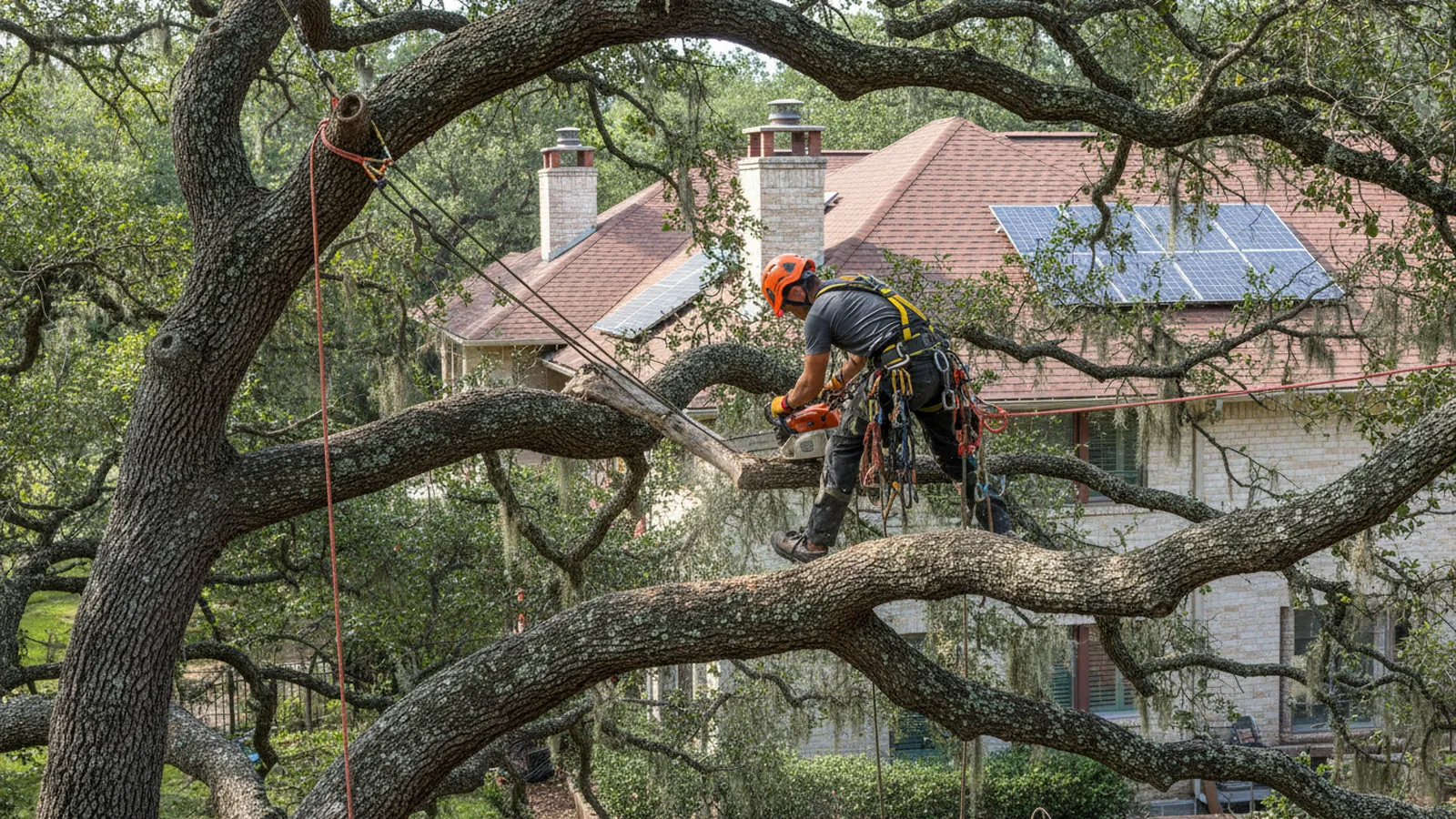
A dead tree, and a tree that is diseased or hazardous to the point of imminent danger, can be removed without a permit. The city still expects documentation, photographs and sometimes an arborist's letter, and will ask for it if a neighbor reports the removal. Trimming is not regulated, though removing more than a quarter of a heritage tree's canopy, or cutting its roots, is treated as damage and can be penalized. Trees under 19 inches on residential property need nothing.
Mitigation
For a protected tree, the permit usually requires replacement planting on site, from the city's approved species list, sized by the inches removed. For a heritage tree, mitigation is larger: replacement trees adding up to a set fraction of the removed diameter, or a payment into the city's urban forest fund in lieu of planting, at a per-inch rate the city sets. On a 30-inch heritage oak, mitigation can run into the thousands, and the estimate itemizes it once the city responds.
Penalties
Removing a protected or heritage tree without a permit is a code violation with fines per tree that can be very large, plus required replanting. The homeowner is liable, not only the crew. It is the main reason to confirm the permit before anyone with a chainsaw starts.
The process
The contractor measures and photographs the tree and the site, completes the city's application with the reason for removal, and submits it. The city's arborist reviews, may inspect, and issues the permit with conditions, or asks for more, or refuses. A protected tree usually takes days to a few weeks; a heritage tree with a hardship claim longer. The permit timeline goes on the estimate so the removal is scheduled when it is legal.
The suburbs
Round Rock, Cedar Park, Georgetown, Pflugerville, Leander, Lakeway, Dripping Springs, Kyle and Hutto each have their own ordinances, with different thresholds and, in some cases, protection only on larger lots or commercial sites. The contractor checks the rule for the specific address; it is never assumed that Austin's rule, or no rule, applies.
Questions on this
Do I need a permit to trim a big oak?
No. Pruning is not regulated. Removing more than a quarter of a heritage tree's canopy, or cutting its roots, counts as damage, and the crew stays well inside that.
My tree is dead. Can it come down tomorrow?
Yes, if it is dead or an imminent hazard. The contractor photographs and documents it first so the exemption holds up if the city asks.
How much is the mitigation?
For a protected tree, replacement planting sized to the inches removed. For a heritage tree, replacement trees or a fund payment at the city's per-inch rate, which on a large oak can run into the thousands. It is itemized once the city responds.
Can the city refuse?
For a heritage tree without a genuine hardship, yes. A healthy heritage live oak that is simply in the way of a pool is often refused.
Who is liable if a crew removes a protected tree without a permit?
The property owner, as well as the contractor. The fines are per tree and substantial. Confirm the permit before any cut.
Does Round Rock have the same rule?
No. Each suburb has its own ordinance with its own thresholds. The contractor checks the rule for the address before quoting.
Related reading: Tree removal · Tree removal cost · Tree trimming · Texas licensing guide