Stump grinding in Austin: below the grade, roots chased, hole filled, lawn back
A stump left in a lawn becomes a mower obstacle, a termite buffet and, on a hackberry or a Chinese tallow, a thicket of sprouts. Grinding it out takes an hour or two, and the only decisions are how deep, what to do with the chips, and what goes back in the hole.
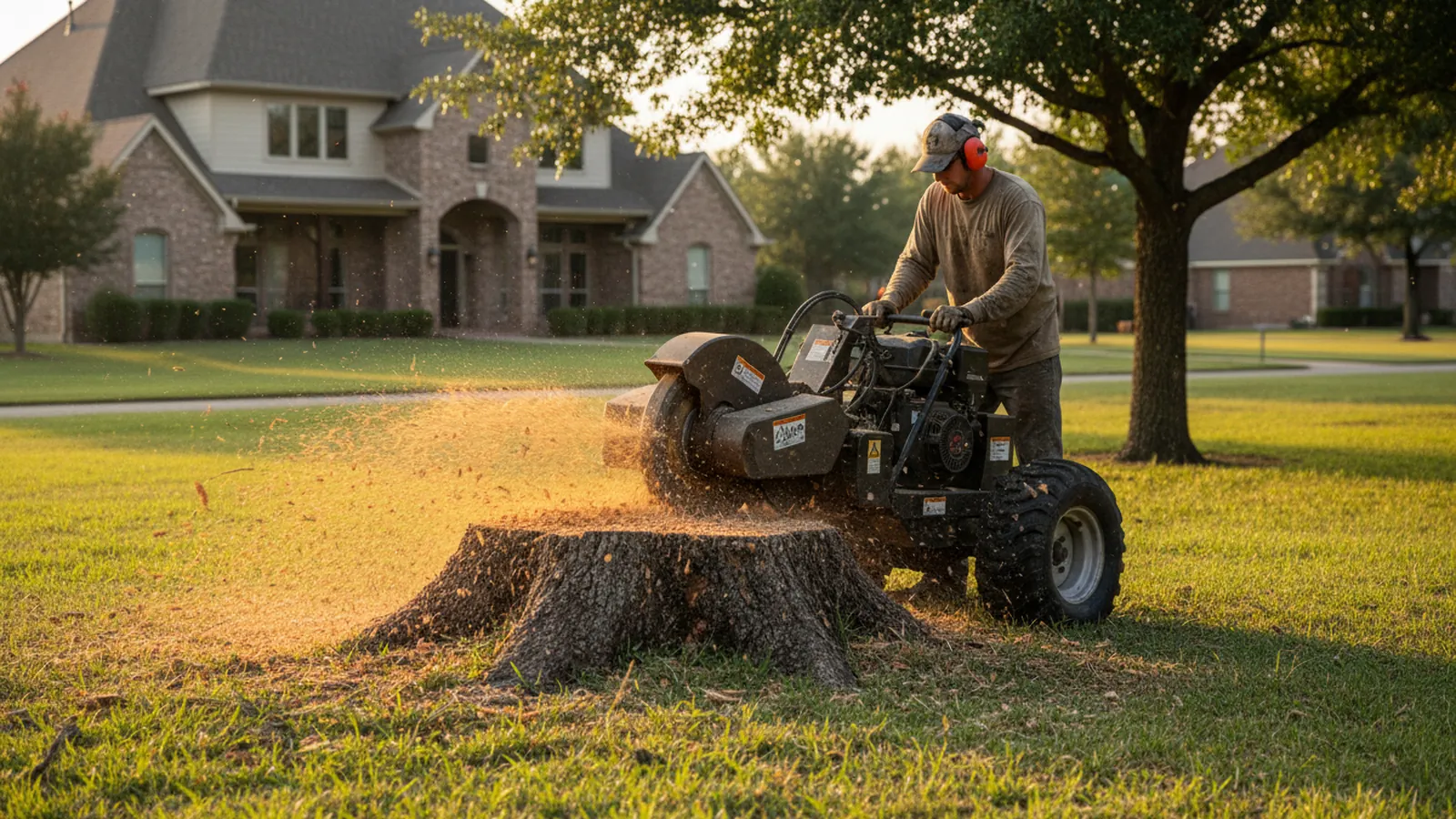
A stump grinder is a wheel of carbide teeth on an arm; it chews the stump into chips from the top down and from side to side until the wood is below the surrounding grade. Standard depth is 8 to 12 inches below grade, enough to lay sod or plant a bed over the spot. Deeper grinding, 18 inches or more, is for a spot where a new tree or a fence post is going in. Surface roots that run out from the stump are chased and ground as far as makes sense, usually a few feet, so the lawn can be leveled.
What comes out is a mound of wood chips mixed with soil, often two or three times the stump's volume. The choices: leave the chips as mulch in a bed, rake them out thin over the lawn, or haul them off and bring in topsoil. For a lawn, hauling the chips and filling with soil is the right call, because a hole full of wood chips settles for years and will not grow grass. The fill is tamped, and the spot is seeded, or a piece of sod is dropped in to match the lawn.
Austin specifics. Limestone close to the surface west of MoPac stops a grinder, and sometimes the honest answer is to grind what can be ground and cover the rest with soil and a bed. Buried utilities and sprinkler lines are the other hazard: the Texas 811 locate is called before deep grinding near the street, and the irrigation lines are mapped from the controller before the grinder goes near a lawn with a system. Hackberry, tallow and mulberry stumps resprout; those get the deeper grind and the roots chased, or a treatment on the cut surface by a licensed applicator.
What the crew brings to it
Below grade, not flush
8 to 12 inches below the surrounding ground as standard; deeper where a tree or post is going in.
Roots chased
Surface roots ground out a few feet from the stump so the lawn can be leveled.
Utilities located
Texas 811 called before deep grinding near the street; sprinkler lines mapped before grinding in an irrigated lawn.
Chips dealt with
Left as bed mulch, spread thin, or hauled and replaced with topsoil for a lawn.
Lawn restored
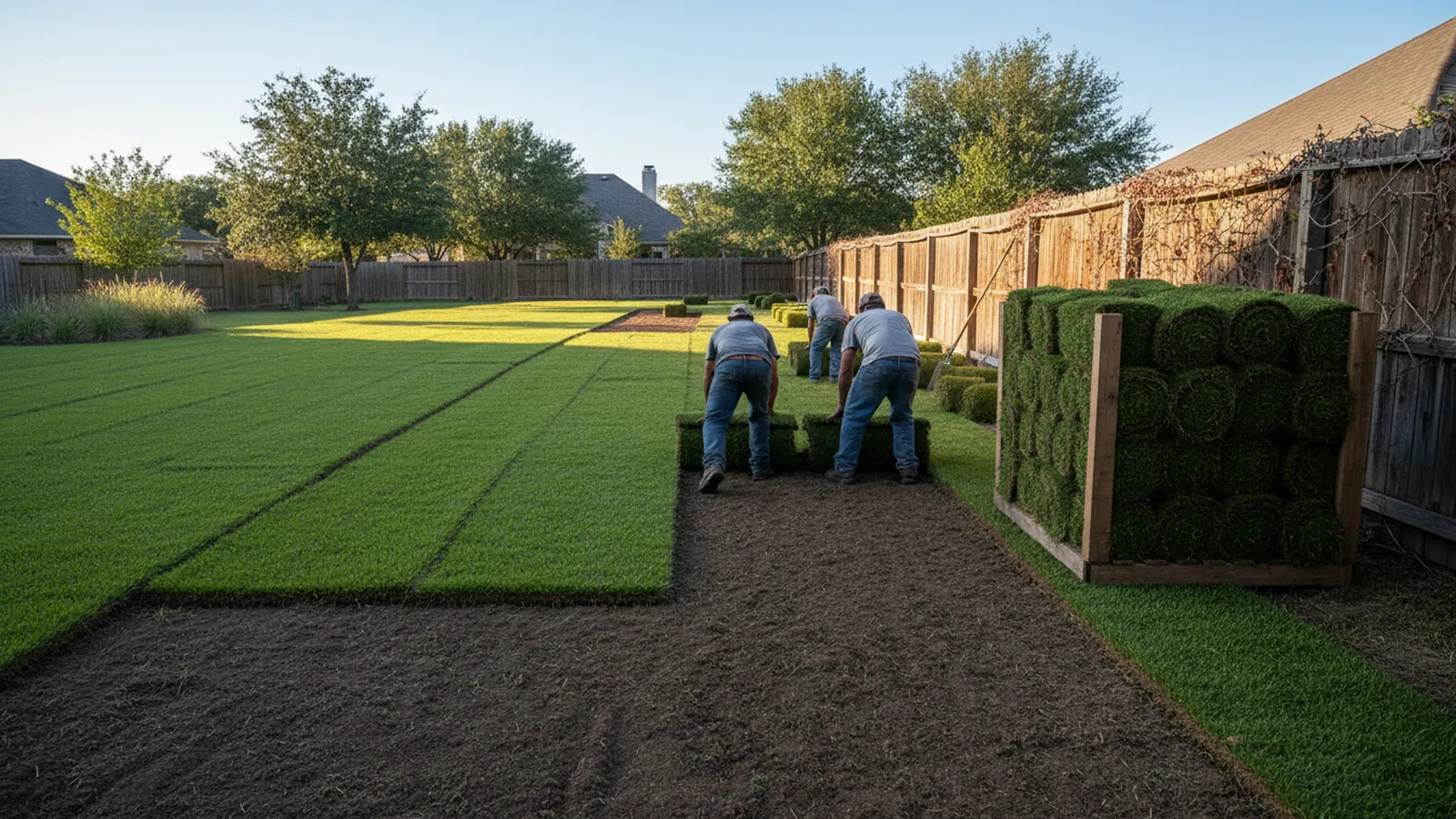
The hole tamped and filled, then seeded or patched with sod to match.
Sprouters handled
Hackberry, tallow and mulberry ground deep with roots chased, or treated by a licensed applicator.
Stump removal around Austin: 2026 prices
| Job | Range | Depends on |
|---|---|---|
| Stump up to 12 inches diameter | $100 – $180 | Access, depth |
| Stump 12–24 inches | $180 – $300 | Diameter, roots |
| Stump 24–36 inches | $300 – $450 | Large oaks and pecans |
| Over 36 inches | $450 – $700+ | Time on site |
| Deep grind for replanting (18 in.+) | + $60 – $150 | Per stump |
| Chip haul-off and topsoil fill | $60 – $160 | Volume |
| Sod patch over the spot | $40 – $100 | Grass type |
| Several stumps, same visit | Discounted | Set-up shared |
Ranges for Austin and the surrounding Williamson and Hays County towns in 2026, to help you plan. The written estimate after the walk-through is the price; it is itemized, free, and good for 30 days.
On the job
Questions about stump removal
How deep do you grind?
8 to 12 inches below grade as standard, which is enough for sod or a bed. For a new tree or a fence post, 18 inches or more.
Can I just leave the chips?
In a bed, yes; they make decent mulch. In a lawn, no; a hole of chips settles for years and grass will not root in it. Haul and fill is the right answer for turf.
What about the roots?
Roots left in the ground rot over a few years without harm. Surface roots that interfere with mowing or leveling are chased and ground; deep roots are left.
Will the stump sprout again?
Oaks, pecans and elms rarely do. Hackberry, Chinese tallow, mulberry and crape myrtle will, and those get a deeper grind with the roots chased, or a cut-surface treatment by a licensed applicator.
Is there a risk to my sprinkler system?
There is if nobody checks. Lines are mapped from the controller and flagged before the grinder goes near an irrigated lawn, and any nicked line is repaired.
How fast after a removal can the stump be ground?
The same day when the grinder is on the job, otherwise within a week. Stumps from old removals are scheduled the same way.