Mowing in Austin: a set day, a clean edge, and a blade height that changes with the thermometer
A mow is the most frequent thing anyone does to a yard and the easiest to do badly. Scalped Bermuda in July, a dull blade tearing St. Augustine, clippings blown into the street. The visit is simple; doing it right every week is the service.
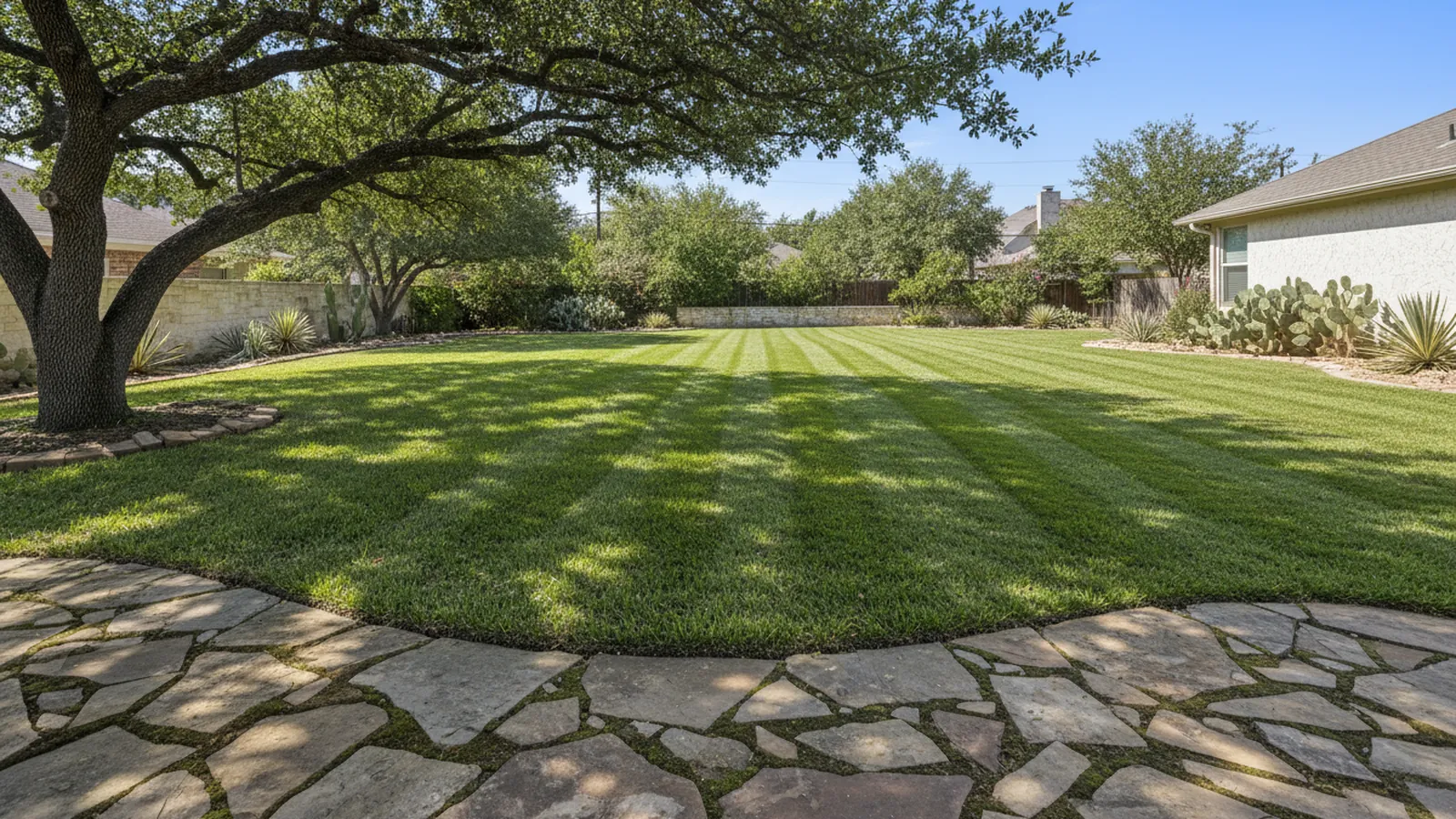
Each visit is the same four things. Mowing with sharp blades at the height the grass and the season call for: Bermuda and Zoysia low in spring and high in summer, St. Augustine never below three inches. Edging along walks, driveways and curbs with a blade edger, not a string trimmer turned sideways. Trimming around trees, beds, fences and the mailbox. Blowing clippings off hard surfaces and back onto the lawn, never into the gutter, where Austin's storm drains run to the creeks. Clippings are mulched back in on a healthy lawn and bagged when the grass is wet, diseased or overgrown.
Frequency depends on the grass and the month. Bermuda in May wants a weekly cut; cutting it every two weeks takes off too much at once and browns it. In the heat of August and through the winter, biweekly is fine for most lawns. A one-time cut is a different job: an overgrown rental, a lot that sat through a sale, a yard after a long absence, cut in stages so the grass is not scalped, with the extra haul-off priced on its own line.
Two Austin specifics. Crews do not mow a wet Blackland clay lawn, because the ruts last all season; a rain day moves the visit, not the price. And a lawn that is going brown in a drought stage is mowed less and higher, not more, because a dormant lawn cut short does not come back.
What the crew brings to it
Set day, same crew
A fixed weekday and the same crew, so the yard is cut the same way every visit.
Sharp blades, right height
Blades sharpened often; heights set by grass type and raised through the summer.
Blade edging
Walks, drives and curbs edged with a blade for a clean line, not a frayed one.
Clippings handled properly
Mulched into a healthy lawn, bagged when wet or diseased, never blown into the street.
Rain and drought judgment
No mowing on saturated clay; dormant lawns cut higher and less often.
Rentals and one-time cuts
Overgrown lots cut in stages with haul-off priced on its own line; photos sent to the manager.
Lawn mowing around Austin: 2026 prices
| Job | Range | Depends on |
|---|---|---|
| Weekly mow, edge, trim, blow, up to ¼ acre | $45 – $65 | Lot size, obstacles |
| Weekly, ¼ to ½ acre | $65 – $95 | Lot size |
| Biweekly service | $55 – $110 | Per visit; slightly higher than weekly |
| One-time cut, maintained lawn | $60 – $120 | Size |
| One-time cut, overgrown lot | $150 – $400 | Height of growth, haul-off |
| Bagging and haul-off | + $10 – $30 | When required |
| Acreage mowing, per acre | $75 – $150 | Terrain, obstacles |
Ranges for Austin and the surrounding Williamson and Hays County towns in 2026, to help you plan. The written estimate after the walk-through is the price; it is itemized, free, and good for 30 days.
On the job


Questions about lawn mowing
Weekly or every two weeks?
Weekly from April through June when Bermuda and Zoysia are growing fast; biweekly is fine in the heat of late summer and through winter. St. Augustine in shade can go biweekly most of the year.
Do you mow in the rain?
Not on saturated ground. Austin's clay ruts and compacts when it is wet, and the ruts stay. The visit moves to the next dry day.
Can you mow a lawn that has gone dormant?
Yes, but less often and higher. A dormant Bermuda lawn cut short in August does not recover until spring.
Will you bag the clippings?
When the grass is wet, overgrown or diseased, yes. A healthy lawn is better off with clippings mulched back in; they return nitrogen and shade the soil.
Do you handle rental properties?
Yes. Managers get a set day, a monthly price and a photo after each visit. Tenants do not need to be home; gates need to be unlocked.
Is there a contract?
No. Service runs month to month and stops with a week's notice.